


China Industrial Cooperation Association
Shanghai Federation of Industrial Economics
Shanghai Federation of Economic Organization
Green Industry Enerey Conservation Branch,CICA
Industrial and Information Technology Equipment Engineering Research Institute (Beijing) Co., Ltd
Shanghai Berrick Exhibition Co., Ltd
China’s first local regulation focusing on the sector of embodied intelligent robots
Regulations of Hangzhou City on Promoting the Development of the Embodied Intelligent Robot Industry
The Regulations of Hangzhou City on Promoting the Development of the Embodied Intelligent Robot Industry has been reviewed and approved at the 23rd Session of the Standing Committee of the 14th Zhejiang Provincial People's Congress and shall take effect on May 1 this year.
The Regulations were drafted under the auspices of Hangzhou Municipal Development and Reform Commission. Comprising 7 chapters and 50 articles, they cover technological innovation, infrastructure construction, industrial development, application empowerment, safety management and other key areas.
To address the biggest bottleneck plaguing the industry — the lack of adequate application scenarios — the Regulations include a dedicated chapter on "Application Empowerment". It encourages public institutions to open up their operational scenarios, explores a "cooperative innovation procurement" mechanism, and establishes channels for the first trial and commercial adoption of new technologies and new products.
Last year, the total output value of Hangzhou’s embodied intelligence industrial cluster hit 106.8 billion RMB, firmly placing the city among the country’s top-tier regions in this field. Hangzhou’s embodied intelligence sector has drawn consistent global attention: Unitree Robotics, a local enterprise, has appeared on China’s Spring Festival Gala three times. In addition, the German Chancellor held in-depth talks with Unitree, BrainCo and other Hangzhou-based firms to explore new avenues for artificial intelligence cooperation.
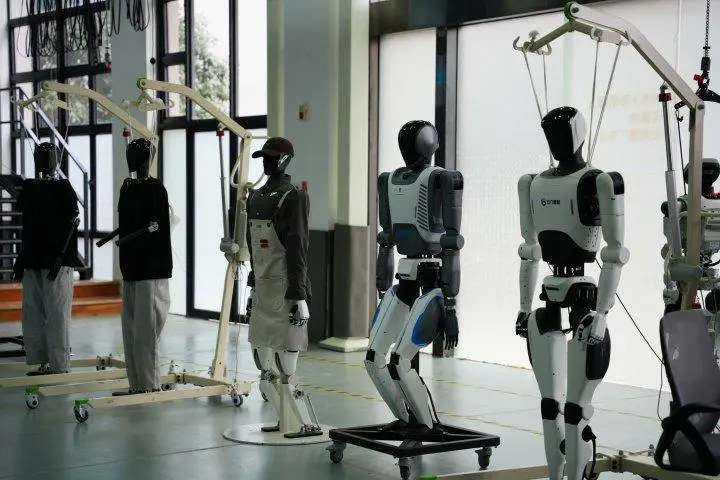
The Regulations stipulate that efforts shall be made to integrate an efficient market with a proactive government. It encourages fostering an institutional environment that supports innovation and tolerates trial and error, while establishing a tiered and categorized supervision system to safeguard the sound and orderly development of the industry.
“The issuance of the Regulations mainly serves as a guide, encouraging enterprises to take the lead in trials and pilots,” said a relevant person in charge of Hangzhou Hikrobot Co., Ltd. “A unified identity authentication system for robots may be necessary to standardize follow-up management.” A staff member from Unitree Technology participated in the full preliminary research for legislation. His proposals on safety management such as coding standards for embodied intelligent robots have been incorporated into the Regulations.
Experts from the Legislative Research Institute of Zhejiang University commented that the Regulations will not only amplify Hangzhou’s industrial advantages, but also drive coordinated development of relevant industries across Zhejiang Province and generate spillover effects through collaborative growth of the industrial chain.
According to the China Development Report 2025 released by the Development Research Center of the State Council, China’s embodied intelligence industry market size is expected to exceed one trillion RMB by 2035. The Outline of the 15th Five-Year Plan of the People’s Republic of China proposes to make forward-looking arrangements for future industries and cultivate embodied intelligence as a new growth driver.

News Commentary: Empowering Future Industries with Legal Safeguards
Embodied AI, a concept still unfamiliar to many, has emerged as a new arena for global technological competition. Representing deep integration between artificial intelligence and the real economy, embodied AI is widely regarded as the next major frontier of AI development following large foundation models. This concept was written into the Government Work Report for the first time at this year’s Two Sessions, drawing nationwide widespread attention.
Hangzhou has sharply seized this industrial development opportunity. In its Government Work Report released in January this year, the Hangzhou Municipal Government set the goal of fully building China’s "top city for AI innovation and development".
Behind the booming industrial growth lie prominent pain points that cannot be overlooked: insufficient application scenarios, incomplete standard systems, blank regulatory frameworks, poor coordination across industrial chains, and more. Without resolving these bottlenecks, the industry cannot achieve sustainable, long-term growth. The formulation of the Regulations marks a proactive move to respond to industrial demands and break development bottlenecks through legislation.
This sends a clear message: the rule of law is not a restrictive shackle on industrial development, but a safety belt that safeguards sustained and sound industrial progress. When an industry reaches a certain stage of maturity, legal safeguards are no longer an optional extra, but an indispensable necessity. Enshrining reform achievements and charting the course of industrial development through legislation embodies the modernization of local governance capacity.
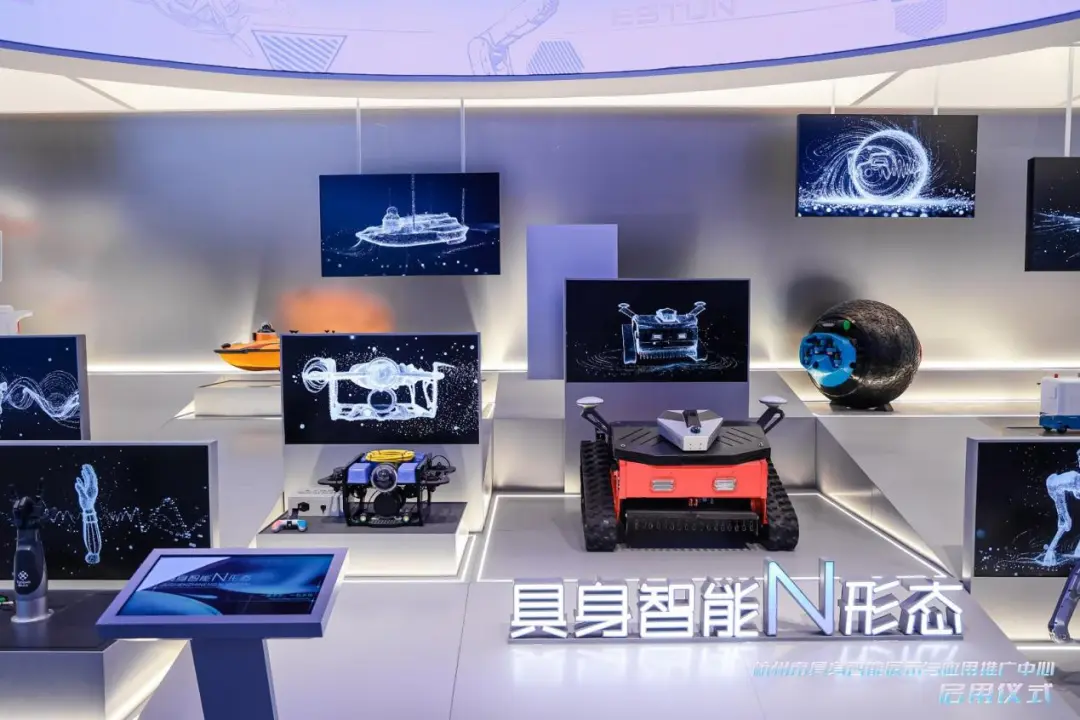
This serves as a vivid practice of open legislation.
A sound regulation must be rooted in real-world practice and draw wisdom from the public. During the formulation of the Regulations, Hangzhou adopted open legislation and solicited opinions from all stakeholders. As the drafting authority, Hangzhou Municipal Development and Reform Commission held multiple forums for enterprises and scientific research institutions. Leading industrial players and top research institutes spoke freely and offered valuable proposals for the legislation.
“Seventy percent of hardware suppliers for our company’s products are based outside Hangzhou. There are no unified implementation standards for similar products, making it impossible to realize standardized and interchangeable components,” a representative from Deer Robotics pointed out, laying bare the difficulties hindering industrial chain coordination.
“There is a lack of industry-specific or scenario-tailored foundation models adapted for niche sectors such as power grids, oil and chemical industries,” a demand raised by Shenhao Technology reflects the urgent need for technological breakthroughs.
“Enterprises face obstacles in securing application scenarios, rolling out products and collaborating with peers. The government could open public scenarios and build matching platforms,” a suggestion from Westlake Interaction highlighted the bottlenecks restricting commercial deployment.
The open legislative process translated enterprises’ “lists of challenges” into regulatory “lists of solutions”, and research institutions’ “lists of proposals” into formal legal provisions. This ensures every institutional design can stand the test of practical application. It shows that legislation must never be done behind closed doors. Instead, authorities should identify real demands from enterprises and collect expertise from research bodies, delivering grounded, solid regulations that fit industrial realities.

This represents targeted policy measures tailored to local conditions.
The Regulations consist of 7 chapters and 50 articles, covering technological innovation, infrastructure, industrial development, application empowerment, safety management and other comprehensive areas. Its legislative philosophy of "one key for one lock" embodies the wisdom of targeted governance.
Hangzhou boasts strengths in complete robot machines, intelligent algorithms and scenario applications, yet lags somewhat in upstream segments such as core components. Based on this reality, the Regulations help amplify local strengths and shore up weak links, delivering tailor-made legal safeguards for industrial growth.
“Though the draft covers the full industrial chain of embodied intelligent robots, Hangzhou should concentrate on its advantageous sectors and speed up industrial development centered on complete machines, intelligent technologies and scenario applications.” Proposals put forward by Haichuang Humanoid Robot Industry Innovation Center were adopted, reflecting the scientific approach of formulating localized legislation that highlights regional characteristics.
This illustrates that local legislation should not merely copy superior-level rules without differentiation. Instead, authorities must introduce targeted measures suited to local realities to make regulations practical and operable. A regulation with a narrow, focused scope often solves practical problems more effectively than an overly broad, all-encompassing one.

This delivers replicable and scalable institutional arrangements.
The value of a regulation lies not only in solving immediate challenges, but also in offering referable experience for other regions. From pioneering trials to replicable institutional practices, Hangzhou blazes a trail for the nationwide development of the embodied intelligence industry through legislative innovation and delivers a "Hangzhou Model" for nurturing future industries.
Experts from Renmin University of China commented: "The development of future industries calls for pioneering trials to explore new paths and new models, which sets an exemplary benchmark for policy innovation nationwide."
This shows that local legislation should adopt a national perspective. While grounded in local realities, it must also take the overall national development landscape into account. A sound local regulation shall resolve regional issues and share replicable experience for the whole country — this is where the vitality of local legislation resides.
Sound laws bring effective governance, promising a bright future. The implementation of the Regulations marks merely a new starting point. We look forward to the Regulations delivering tangible results, injecting robust momentum into the growth of the embodied intelligence industry and carving out a law-based path for fostering future industries across China. Under the safeguard of the rule of law, embodied intelligence, as a future-oriented industry, will achieve sustained and sound development and fuel high-quality growth of China’s economy.
Source: Hangzhou Development and Reform Official Release